

Here is the English translation of your text:
Nowadays, both positive and negative discussions, interpretations, and analyses about the Kirat religion and its traditions are appearing in various media. This is natural because, before the people’s movement of 1990 (B.S. 2046), Nepal was ruled for more than 200 years under a centralized system that enforced policies like “one religion, one language, one dress.” Due to such autocratic and oppressive policies, it was not possible to discuss or analyze religions other than Hinduism.
Even after the Rana period, when followers of the Kirat religion in eastern Nepal performed religious rituals or when Gurungs and Tamangs built Buddhist monasteries, the Panchayat administration would accuse and punish them. Therefore, even today, some regressive elements carrying the mindset of the Rana and Panchayat eras do not want to see democratic practices in religion, language, and culture.
However, the reality of Nepal is that it is a multi-ethnic, multilingual, and multi-religious country. This is clearly shown by national census reports published by the Central Bureau of Statistics, which confirm that followers of Hinduism, Buddhism, Islam, Kirat, Christianity, Jainism, and Sikhism live in Nepal.
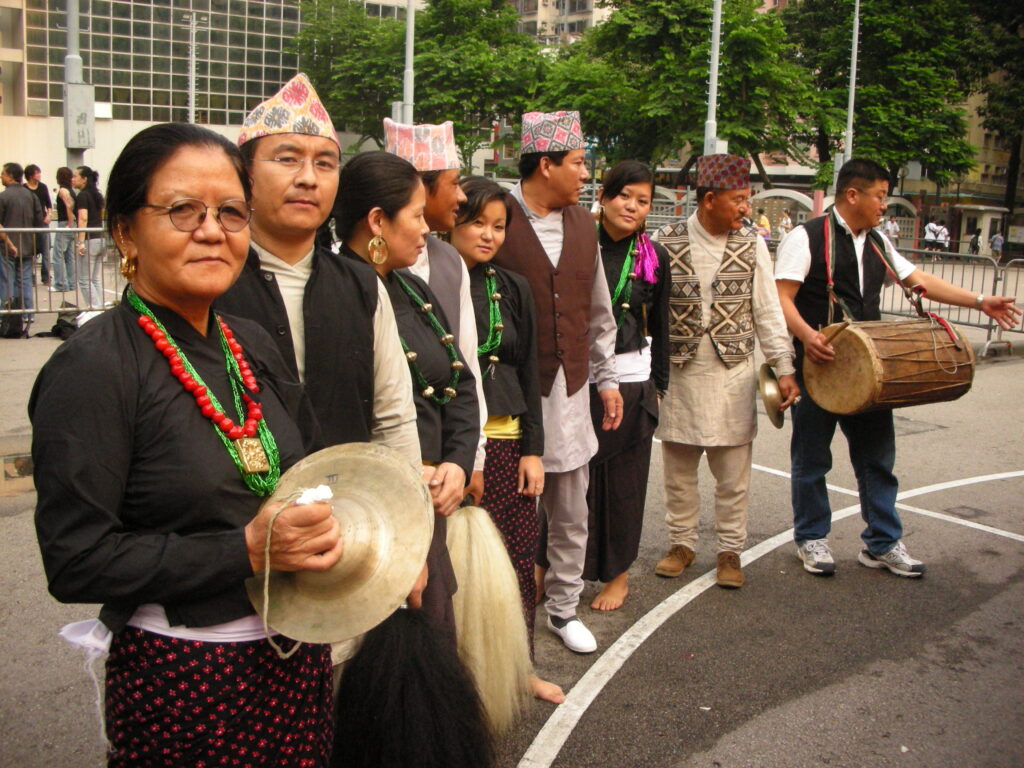
Indigenous groups such as Rai, Limbu, Yakkha, and Sunuwar have continuously identified themselves as followers of the Kirat religion for thousands of years. According to Mundhum scholars, Kirat religion is one of the oldest religions in the world. Although it is a deep, logical, and humanistic philosophy, it could not expand like other religions due to historical reasons. However, its inherent values and ideals remain relevant and inspiring even in the scientific age.
Mundhum
Just as the Vedas for Hindus, the Bible for Christians, and the Quran for Muslims, “Mundhum” is the source of philosophy and culture in Kirat religion. It explains the origin of the earth, sun, planets, stars, creation of humans and other beings, plants, natural balance, and moral values in an engaging and logical way.
Mundhum is a vast source of knowledge and wisdom. However, since it has been preserved mainly through oral tradition, some of its originality may have declined. Although parts of it have been written down, it has not yet been compiled into a single comprehensive text. Therefore, studying and researching Mundhum to understand its knowledge is an important intellectual challenge today.
According to scholars, Kirat religion existed even before Hinduism and Buddhism. King Yalambar, who ruled before Gautam Buddha, was a follower of Kirat religion. During his reign, Kirat religion was the state religion, and its influence spread across Nepal, India, and even as far as Southeast Asia. Rulers governed based on the teachings of Paruhang and Sumnima described in Mundhum.
Concept of God and Creation in Mundhum
Mang (God):
Mundhum describes Mang as infinite, formless, omnipresent, and all-powerful. Mang exists everywhere—in water, land, earth, sky, and stars—and everything is created by this supreme force.
Creation of Life:
Mang used air, water, soil, and sunlight to create plants, making the earth green and beautiful. Birds were born from fruits, insects from grass, ants from tree trunks, and animals like cows, goats, horses, and tigers were also created.
Rumuhang and Nayuma
Mang created Rumuhang (son of the sun) using solar power and Nayuma using natural elements. Since Rumuhang could not remain on Earth permanently, they created Paruhang (with Rumuhang’s qualities) and Sumnima (with Nayuma’s qualities), then merged themselves.
Paruhang and Sumnima
Paruhang and Sumnima were wise, generous, and compassionate. They created humans with intelligence and awareness so they could understand the laws of nature and experience divine truth. After creating humans, they became invisible but left their teachings in Mundhum.
Teachings of Paruhang and Sumnima
These teachings guided both rulers and people in ancient times. People believed that the sun, moon, air, and earth witnessed all actions.
Key moral teachings include:
- Do not beg – Humans should survive through effort and wisdom, not begging, cheating, or deceit.
- Do not steal or cheat – Ill-gotten wealth does not bring prosperity.
- Avoid adultery – Faithfulness is valued; immoral relations bring conflict and suffering.
- Do not be greedy – Excess desire leads to suffering and imbalance.
- Avoid jealousy – It destroys peace and harmony.
- Do not be arrogant – Pride leads to downfall and blocks wisdom.
- Do not kill humans – Life is sacred and must be respected.
Good Deeds (Satkarma)
To achieve spiritual peace and connection with Mang, Mundhum suggests:
- Daily prayer, meditation, and remembrance of Mang, Paruhang, and Sumnima
- Respect elders and help the poor
- Offer food to Mang before eating
- Worship ancestors, especially during Ubhauli and Udhauli festivals
- Protect sacred places like the household hearth and natural elements (fire, water)
- Follow one’s own religion and values
- Dedicate time to social welfare, study, and promoting harmony among people
Note: This content is based on discussions with Mundhum scholars and both published and unpublished sources.
