
Our Objectives
KRAHK operates with complete institutional accountability under Hong Kong law.
What We Stand For
- Preserve and promote the Kirat Rai cultural heritage, traditions, and identity in Hong Kong
- Organise and conduct religious ceremonies, cultural festivals, and community events
- Maintain the sacred Chula House as a religious and cultural centre for the Kirat Rai community
- Provide welfare support and assistance to Kirat Rai community members in Hong Kong
- Foster cultural exchange and understanding between the Kirat Rai community and Hong Kong society
- Document and archive Kirat Rai oral traditions, music, dance, and religious practices
- Represent the interests of the Kirat Rai community in dealings with government authorities
- Collaborate with cultural organisations and academic institutions for heritage preservation
On 28 January 2005 (15 Magh 2061 B.S.), in a rented house located in Yunlang, a sacred hearth (Chula) was established under the chairmanship of then-President Hejen Rai. Soil was brought from Hattiban, where a collective Kirat hearth had been established, and flowers and akshata (unbroken sacred rice) were brought from Kirateshwor Temple for the installation ceremony of the
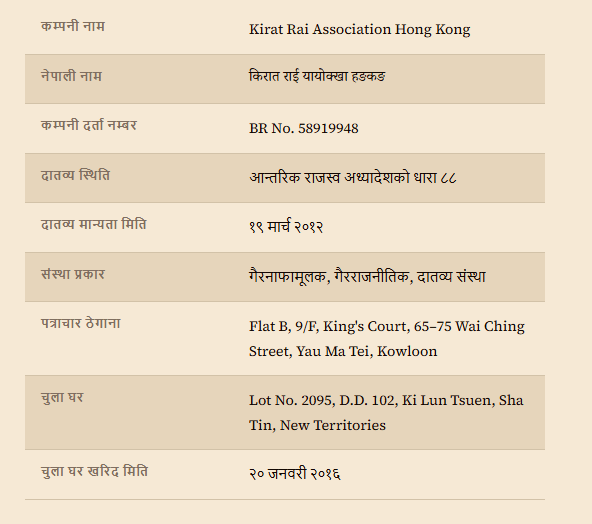
Kirat Rai Yayokkha Hong Kong, established on 28 January 1998 (15 Magh 2054 B.S.), is an organization registered under Hong Kong’s Societies Ordinance (Chapter 151). Later, on 9 August 2011, the organization was re-registered under Hong Kong’s Companies Ordinance (Chapter 32). Subsequently, from 19 March 2012, it obtained recognition as a charitable organization under Section 88 of Hong Kong’s Inland Revenue Ordinance (Chapter 112) and has since been established as the common organization of the Kirat Rai community.

Our History
KRAHK Over the Years
From its establishment to the current land acquisition challenge — a decade of community service and cultural preservation. A registered non-profit and Section 88 charitable organization in Hong Kong since 1998, dedicated to preserving the cultural identity and community welfare of the Kirat Rai community.
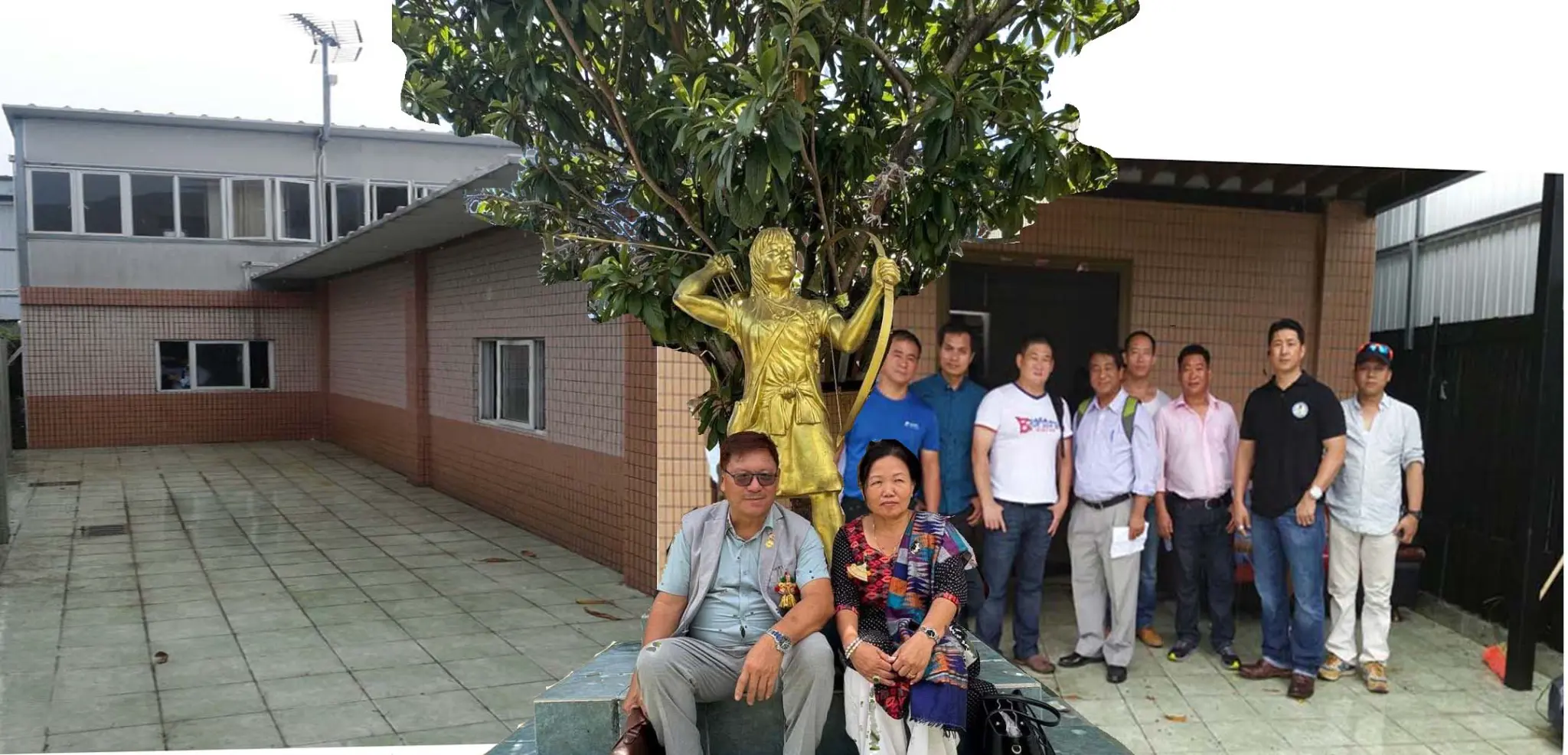
On 20 January 2016 (6 Magh 2072 B.S.), KRAHK purchased a 1-storey house located on 2,500 square feet of land by paying a lump sum of HKD 2,553,000 (twenty-five lakh fifty-three thousand Hong Kong dollars), and the property was brought under the ownership of the organization. This house was named “Suptulunghim” by the Ninth General Assembly. Suptulunghim is located in Kilunchung, in the Shatin District of Yuen Long, New Territories, at a very beautiful scenic place rich in natural beauty. In this area, the Hong Kong government has also maintained cemeteries where the graves of our brave Gorkha Lahure soldiers who attained martyrdom in the Second World War are preserved.

Urgent Matter
Our ancestral ceremony site
Chula House (Lot No. 2095, D.D. 102, Kilun Tsuen, Satung, New Territories) was purchased by KRAHK on 20 January 2016 in Hong Kong to serve as a permanent religious and cultural centre for the Kirat Rai community.
The name “Chula” refers to the sacred three-stone ancestral hearth — a central ritual object in Kirat Rai religious practice. The Chula represents the connection between the living community and their ancestors, and all major ceremonies — including Sakela Ubhauli, Sakela Udhauli, Rai Chhakule Day, and Mundhum recitations — are conducted around it.
Since its acquisition, Chula House has been continuously used as a religious and cultural centre. It serves not only as a ceremonial venue but also as a community hub for welfare activities, cultural education, and the intergenerational transmission of Kirat Rai traditions.
Governance
Organisational Structure
KRAHK is governed by an elected Executive Committee and supported by five specialist councils covering cultural heritage, intellectual affairs, linguistics, sport, and the performing arts.
The Executive Committee — comprising a President, Vice President, Secretary, Co-Secretary, Treasurer, and 15 elected members representing the major Kirat Rai dialect groups — holds a three-year term (2024–2027) and is responsible for all administrative, financial, and legal affairs of the association.
Executive Committee(20)
President, Vice President, Secretary, Co-Secretary, Treasurer and 15 elected members governing all association affairs.
Cultural Heritage Council (3)
Kubimi practitioners safeguarding Mundhum oral scripture and ancestral rites
intellectual Council (4)
Chancellor, Vice Chancellor, Secretary and Co-Secretary advancing academic and scholarly affairs.
Linguistic Council (8)
Eight dialect chairpersons preserving Bantawa, Chamling, Dumi, Thulung, Puma, Bayung, Sampang, and Koyee languages.
Sports Council (7)
Chairman, Vice Chairman, Secretary, Co-Secretary, Treasurer and two ex-members fostering sporting excellence.
Cultural Council (25)
25 Sili dancers and musicians who perform the sacred circle dance at Sakela Ubhauli, Udhauli, and community events.
Associated Partners
Our Partners


Contact Us
Get in Touch
Contact us today to experience our exceptional service and discover how we can help you achieve your goals. We value your time and strive to provide timely and insightful responses to ensure your peace of mind throughout the mortgage process.
Contact:
+977-9851029351
Email:
info@thulunghk.com
Head Office:
Hongkong
